15 August 2026
Sekt: German sparkling made the traditional way
Sekt is the German word for sparkling wine. Most of the sekt on the market is an industrial product, fermented in large pressure tanks. But there is another tradition: producers making sekt from their own grapes, with a second fermentation in the bottle, the same craft as in Champagne. That is the tradition we have brought in.
The method decides
The difference sits in where the bubbles are made. In the tank method, the second fermentation happens in stainless steel, quickly and at volume. In the traditional method it happens in the bottle you open: the wine gets a dose of yeast and sugar, is sealed, and rests on the lees. It is the contact with the spent yeast that builds what separates good sparkling from mere bubbles: brioche, toasted bread, a creamy mousse. Time on the lees is the most expensive ingredient in sparkling wine, and it only shows on the label in words like "traditionelle Methode" or "Winzersekt".
"Brut" tells you the last thing you need: dry, with minimal dosage.
Riesling with bubbles
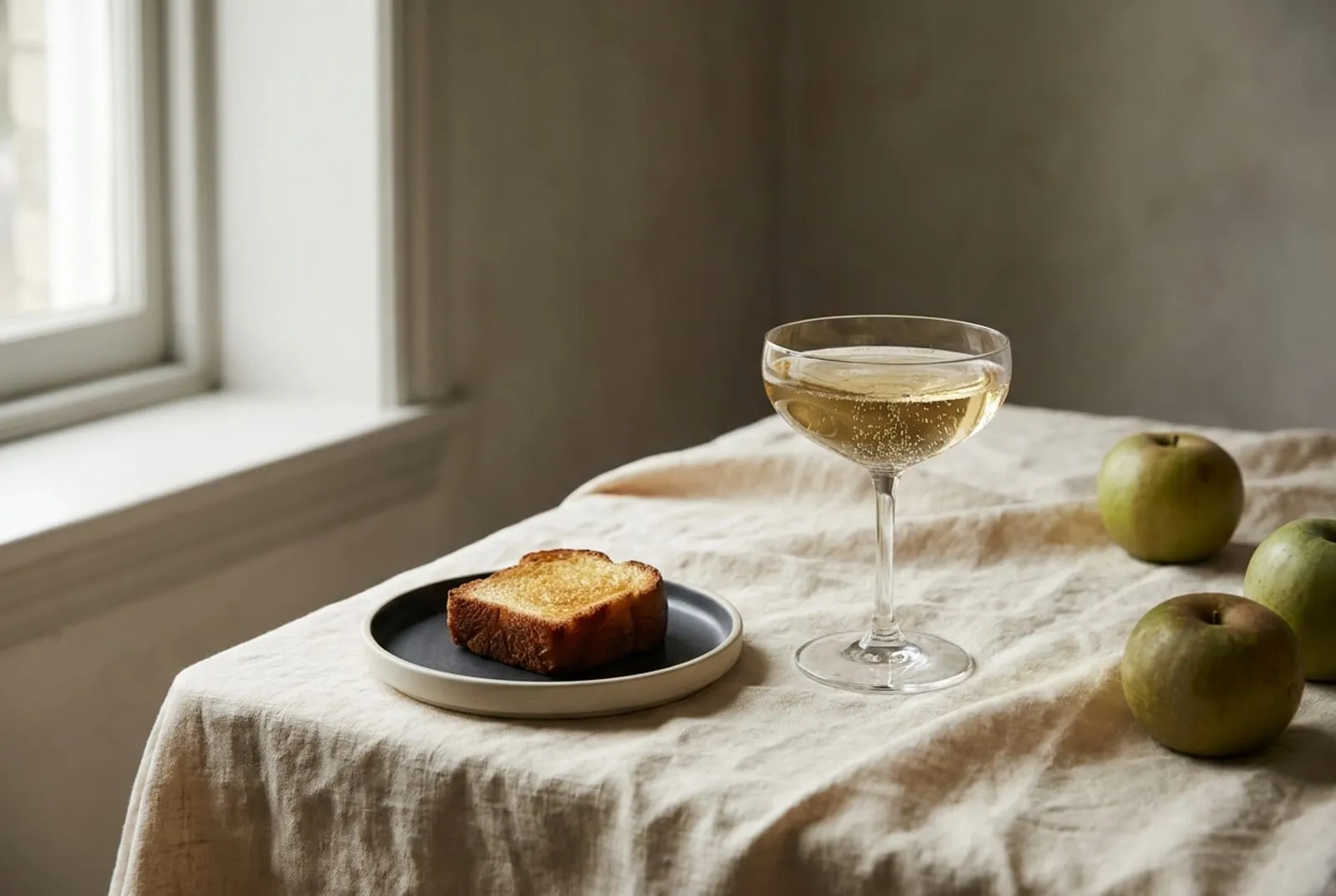
Champagne is built on Chardonnay and the Pinot grapes. German sekt can use the same, but the most distinctive path is sekt from Riesling: the grape's acidity and minerality give a sparkling wine with a clear signature. Riesling Sekt Brut from Paulinshof is made this way, with classic bottle fermentation and long ageing on the lees. Golden in the glass, with brioche, green apples, pomegranate and orange marmalade. As an apéritif, or with shellfish.
The relative from England
If you like the style, English sparkling is the nearest neighbour: the same method, the same cool-climate acidity. Blanc de Blancs from Mountfield in East Sussex is pure Chardonnay with base wine from 2016, disgorged in 2024. Our whole sparkling selection, German and English, is in the sparkling category, available through Vinmonopolet's ordering range.